
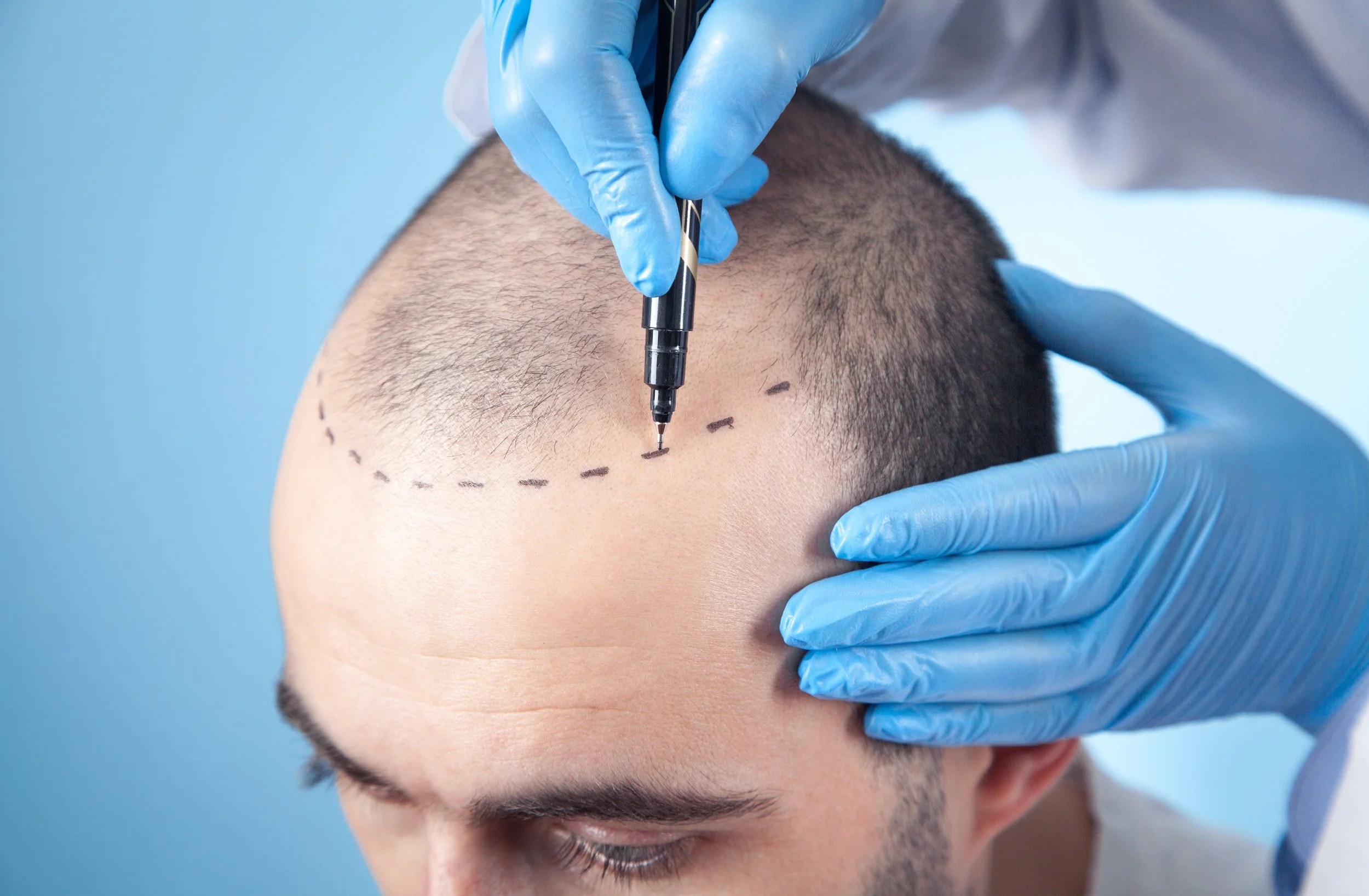
Male pattern baldness, also referred to as androgenetic alopecia, is a genetic condition in which hair transplantation is considered to be an effective treatment. The process involves harvesting hair grafts from a donor area, such as the scalp, and relocating the harvested follicles to an area of alopecia, such as the receding hairline. Follicular unit extraction is a popular technique that can help restore hair.
Those seeking positive hair transplant results should consider laser hair removal procedures to amend improperly designed hairlines. Thankfully, re-transplantations are effective, and hair can be restored with a transplant. However, an individual’s hair may consist of a dense hairline, which is considered to be one of the greatest surgical challenges. Not everyone who receives a hair transplant will gain permanent restoration. Some scalps react negatively to foreign hair follicles. Despite this, hair follicle recycling has proven effective in some cases.
The Hair Transplant Process
If an individual receives a hair transplant, it may not permanently restore hair, but it can provide harvested hair follicles that last for years. A transplant can be permanent if the conditions are met. For instance, a person must have a healthy scalp that is eligible for transplanting follicles. This technique is popular and can provide highly aesthetic results.
A hair transplant can result in a patient’s dissatisfaction if hair follicles are poorly placed or transplanted. Those receiving transplantation procedures can attempt to grow hair, but it is not guaranteed. Additionally, hairline design may leave a patient feeling dissatisfied. Despite this, effective hair transplantations can occur.
How Hair Transplants Work
According to the National Library of Medicine, careful planning should be considered when a person receives a hair transplant.
Although very common in adult men, hair transplantation involves a unique method that consists of the following:
- Recycling and relocating hair follicles for a more natural appearance
- Removing hair with a laser to amend improperly designed hairlines
- Carefully planning the scalp to avoid linear scarring
- Maximizing satisfaction, safety, and long-term results with patient-centered approaches
- Combining surgical skills with clear communication
Hair transplants can prove to be successful when the right conditions are met. The hair donor must be ideal, and so must the candidate. The scalp and nearby areas of skin can be sensitive. In fact, the scalp consists of five separate layers.
The five layers include:
- Skin or epidermis
- Connective tissue
- Aponeurosis
- Loose connective tissue
- Periosteum over the cranium
When a hair transplant takes place, the process must remain within the connective subcutaneous tissue layer to prevent disruption of the blood supply. In addition to this, the skin and subcutaneous tissue contain the hair follicles.
Conditions Complicating Hair Transplants
Each individual is unique, with some suffering from various medical conditions. Certain medical conditions or poor habits can complicate hair transplantation.
Some of the obstacles to hair transplantation include:
- Hypertension
- Immune deficiency
- Smoking
- Advanced balding
- Excessive alcohol use
- Advanced sun damage to the scalp
- Heart disease
- Diabetes mellitus with microvascular damage
Those who struggle or suffer from any of the above may have a difficult time receiving a hair transplant. Without a healthy scalp, transplanted hair follicles are unlikely to remain in place.
Post-operative care consists of avoiding heavy lifting, gradually transitioning to normal hair washing over 2 weeks following surgery, waiting 1 week before brushing your hair, and waiting at least 1 month before cutting or dyeing the hair.
Hair Transplant Options
At Denver Hair Surgery, our professionals are experts in hair transplants and hair restoration. We use several hair transplant methods, including the “strip” method or follicular unit transplantation (FUT). We also provide follicular unit extraction (FUE).
Request an appointment at our hair transplant center to learn more about the process and how we can provide you with a new look. Contact us today to learn more and speak with one of our many talented surgeons.